Italian Spaghetti Carbonara
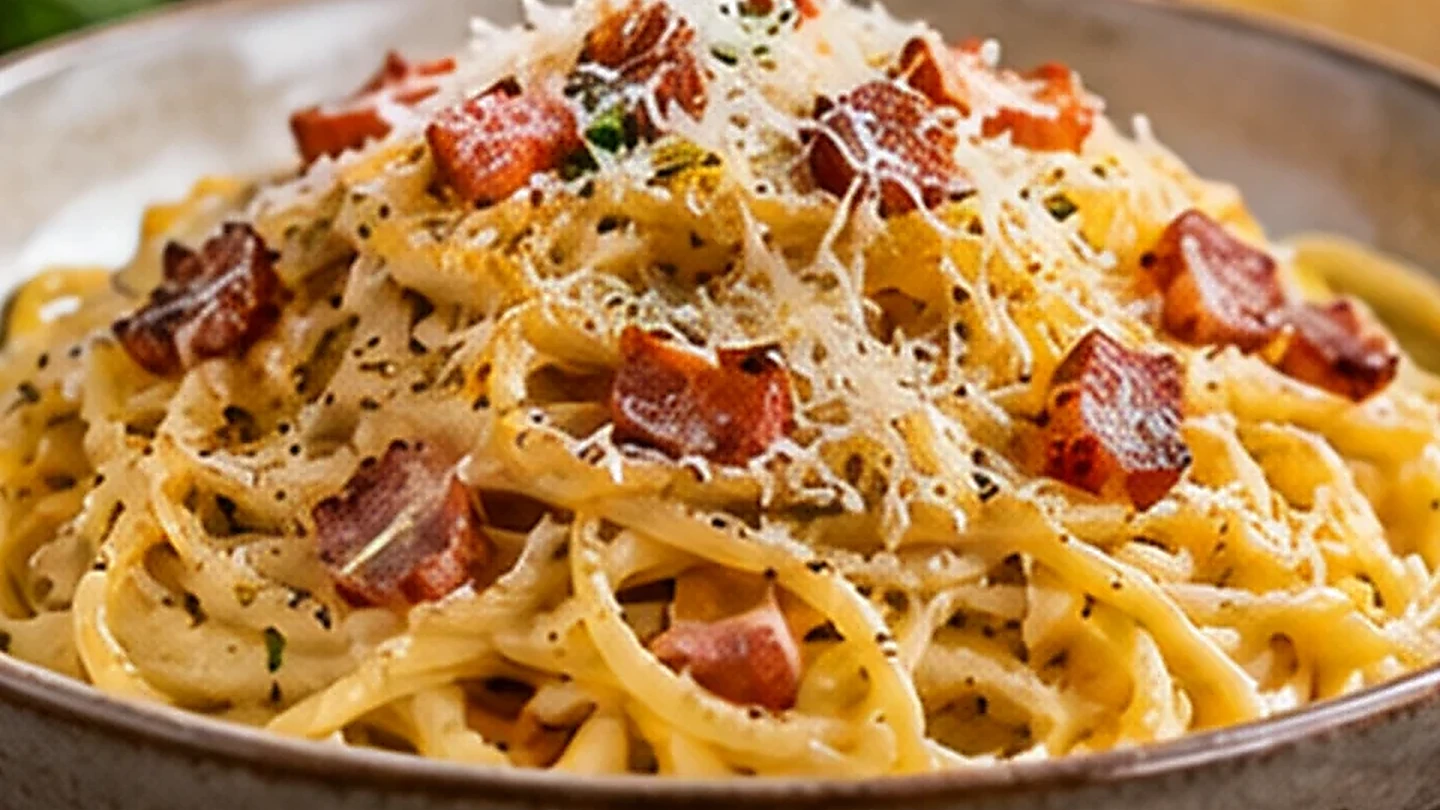
Spaghetti coated in a silky egg, cheese and pasta-water emulsion with crisp smoked beef or turkey as a pork-free home-kitchen adaptation—no cream needed.
Ingredients
Check each ingredient as you prepare it.
Step-by-step instructions
Boil spaghetti one minute shy of package time; reserve a cup of pasta water.
Start smoked beef or turkey in a cold skillet over medium heat until the fat renders and pieces crisp.
Whisk eggs and yolk with most of the cheese and black pepper.
Move hot pasta to the skillet off the heat, add egg mixture and toss quickly.
Add pasta water gradually until glossy; serve immediately.
✦ Tips for success
- Take the pan off the heat before adding eggs.
- Grate cheese finely so it emulsifies smoothly.
⚠ Common mistakes to avoid
- High heat after adding eggs causes curds.
- Too little pasta water prevents the sauce from emulsifying.
Substitutions and ideas
- Smoked turkey can replace smoked beef.
- If the cured meat is salty, reduce the salt in the pasta water and sauce.
Serving suggestions
Serve immediately in warm bowls with extra black pepper and grated cheese; no creamy side is needed.
Storage and reheating
Best eaten immediately; the silky sauce does not keep its texture after chilling.
Frequently asked questions
Can Italian Spaghetti Carbonara be prepared ahead?
Some components can be prepared and refrigerated in advance; finish the final cooking close to serving for the best texture. Take the pan off the heat before adding eggs.
What are suitable ingredient substitutions for Italian Spaghetti Carbonara?
Smoked turkey can replace smoked beef. If the cured meat is salty, reduce the salt in the pasta water and sauce.
You may also like
 Italian Lasagna Bolognese🇮🇹 Italian Cuisine
Italian Lasagna Bolognese
Layers of pasta, meat ragù, béchamel and cheese baked until set and golden.
 Italian Margherita Pizza🇮🇹 Italian Cuisine
Italian Margherita Pizza
Fermented pizza dough topped simply with tomato, mozzarella, basil and olive oil, baked in a very hot oven.
 Italian Mushroom Risotto🇮🇹 Italian Cuisine
Italian Mushroom Risotto
Arborio rice cooked gradually with hot stock and browned mushrooms, finished with butter and Parmesan for creaminess without cream.
Note: Cooking times are estimates and vary with ingredient size, equipment and oven calibration. Follow doneness cues and use a food thermometer for meat and poultry.