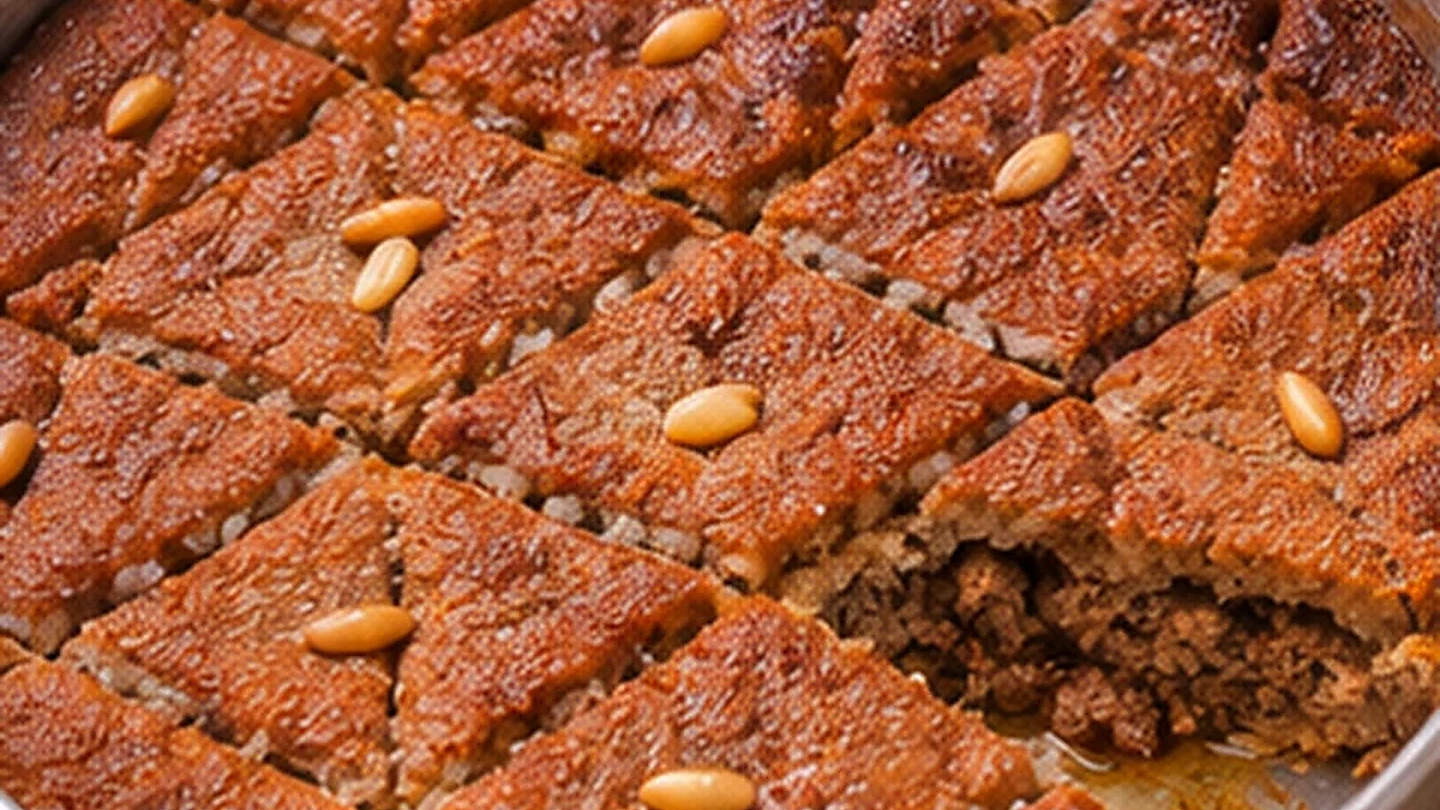
Syrian Baked Kibbeh
Fine-bulgur and meat layers surround a spiced minced-meat, onion and pine-nut filling, then bake until set.
Ingredients
Check each ingredient as you prepare it.
Step-by-step instructions
Soak bulgur for 10–15 minutes, then squeeze it very well.
Combine bulgur with shell meat and spices; process in batches until cohesive.
Cook onion, meat and spices until the filling is browned and dry; add pine nuts.
Spread half the dough in an oiled dish with damp hands, add filling, then cover with the rest.
Score into diamonds, drizzle with oil and bake at 190°C / 375°F until browned.
✦ Tips for success
- Squeeze bulgur well so the shell is not loose.
- Cool the filling before assembling.
⚠ Common mistakes to avoid
- Excess water weakens the shell.
- Hot filling can soften the bottom layer.
Substitutions and ideas
- Walnuts can replace pine nuts.
- Lean lamb can replace beef.
Serving suggestions
Rest before cutting, then serve with cucumber yogurt, a green salad or pickles.
Storage and reheating
Cool after baking and refrigerate for 3 days. Freeze portions and reheat in the oven.
Frequently asked questions
Can Syrian Baked Kibbeh be prepared ahead?
Some components can be prepared and refrigerated in advance; finish the final cooking close to serving for the best texture. Squeeze bulgur well so the shell is not loose.
What are suitable ingredient substitutions for Syrian Baked Kibbeh?
Walnuts can replace pine nuts. Lean lamb can replace beef.
You may also like
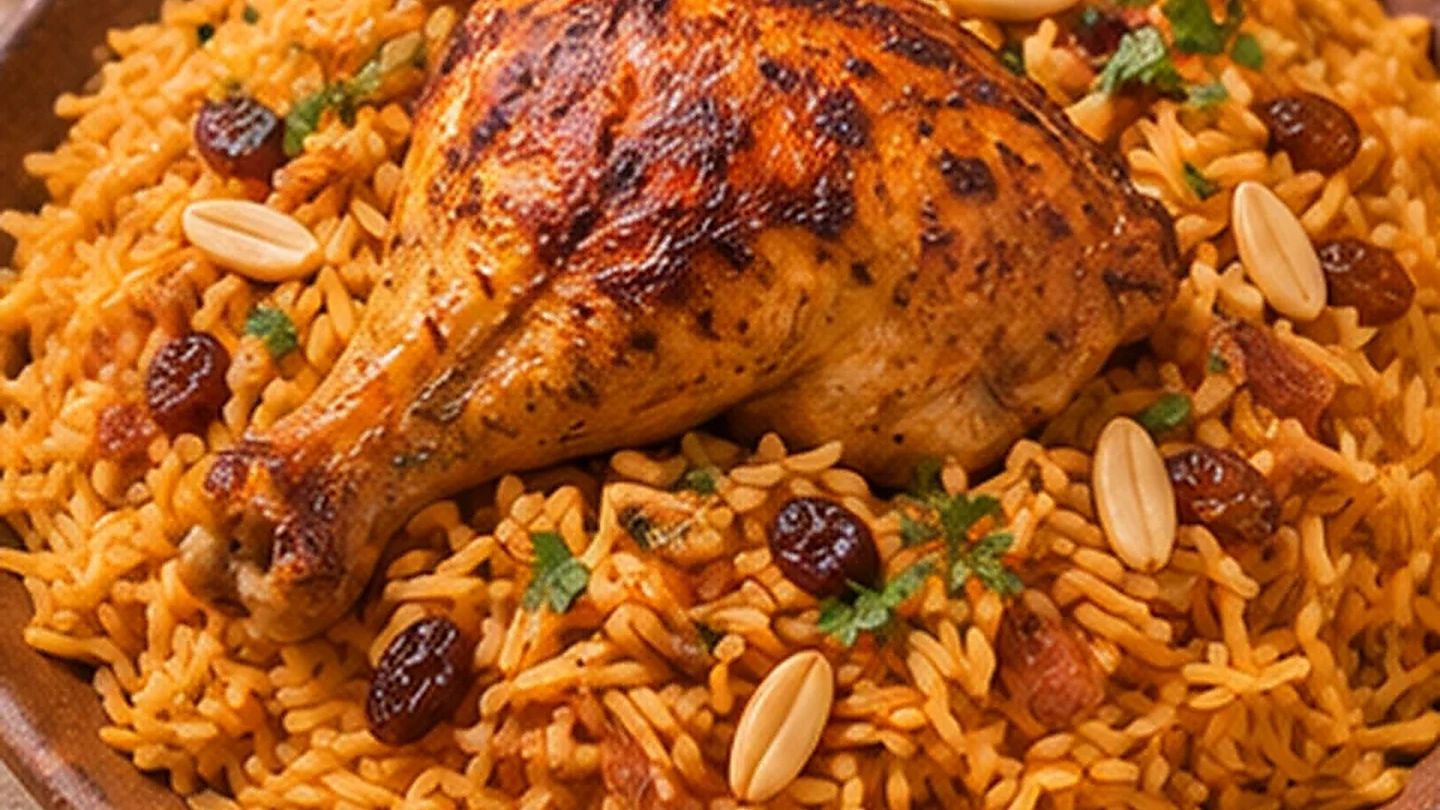 Saudi Chicken Kabsa🌍 Arab Cuisine
Saudi Chicken Kabsa
Basmati rice cooked in aromatic chicken stock with tomato, dried lime and warm Gulf spices.
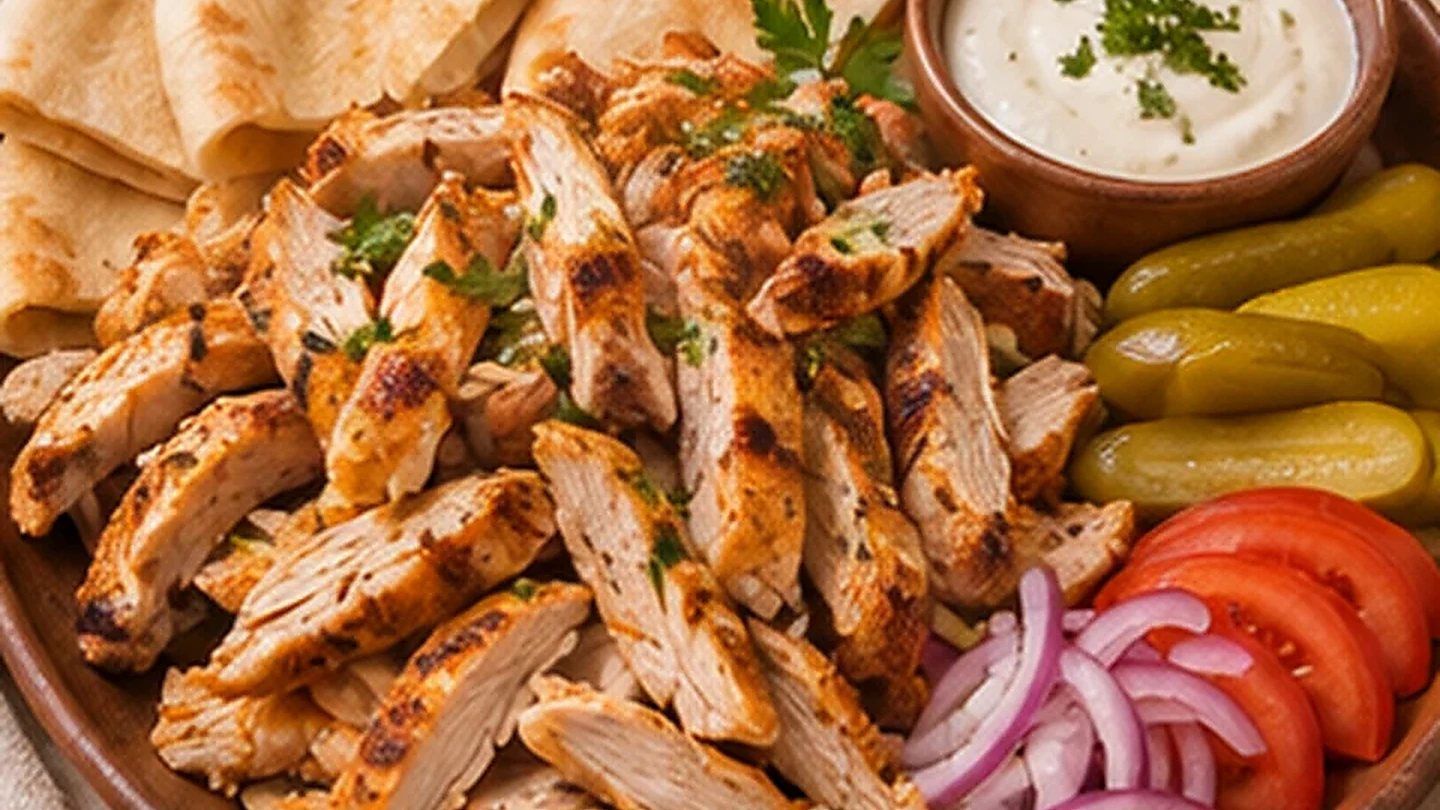 Syrian Chicken Shawarma🌍 Arab Cuisine
Syrian Chicken Shawarma
Chicken strips marinated in yogurt, lemon, garlic and spices, seared and served in flatbread with garlic sauce and pickles.
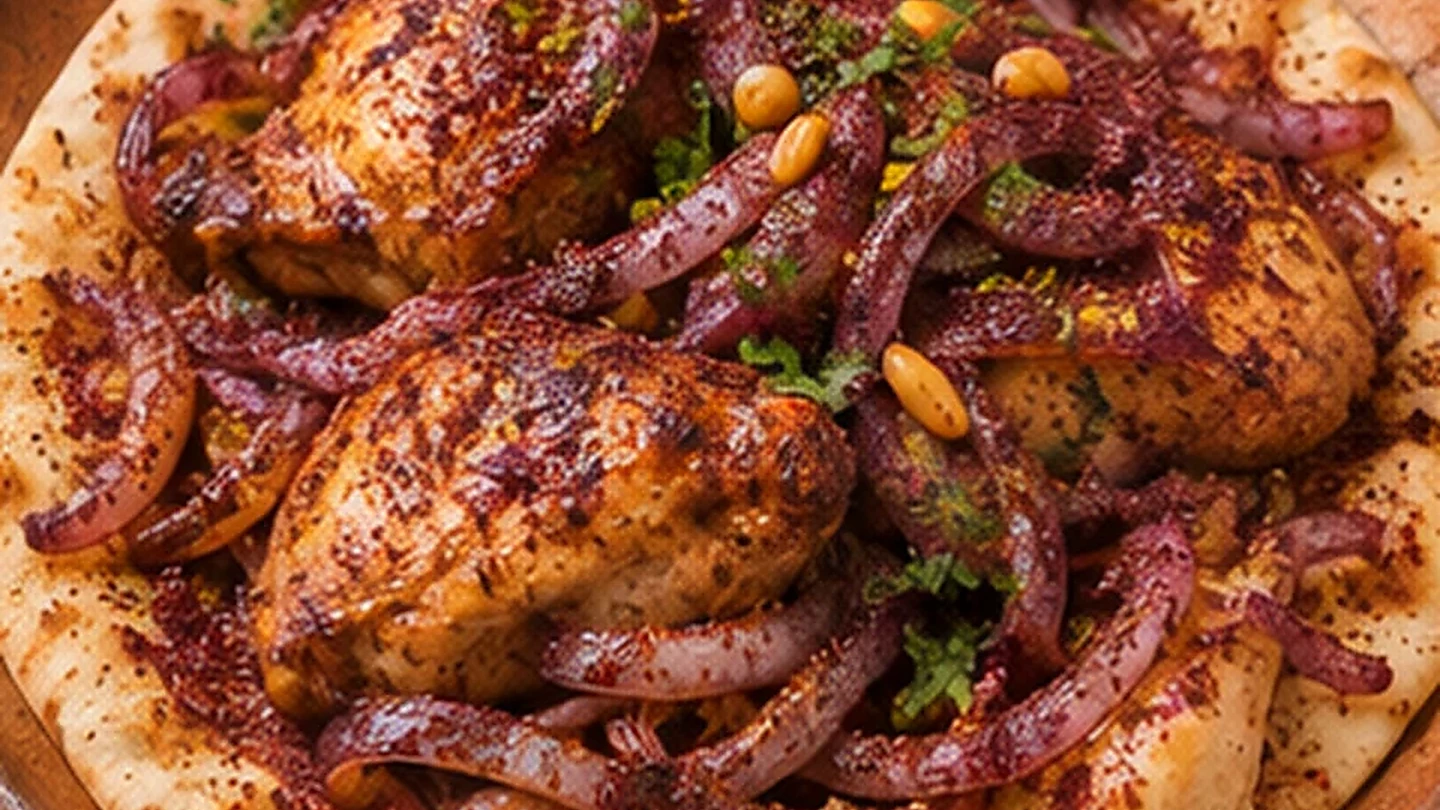 Palestinian Musakhan🌍 Arab Cuisine
Palestinian Musakhan
Roasted chicken with generous onions, sumac and olive oil, served over flatbread with toasted pine nuts.
Note: Cooking times are estimates and vary with ingredient size, equipment and oven calibration. Follow doneness cues and use a food thermometer for meat and poultry.